


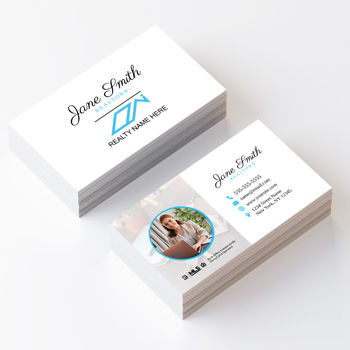
Standard Business Cards
- Traditional & Premium Options
- Square/Round Corners
- Fast Turnaround Options


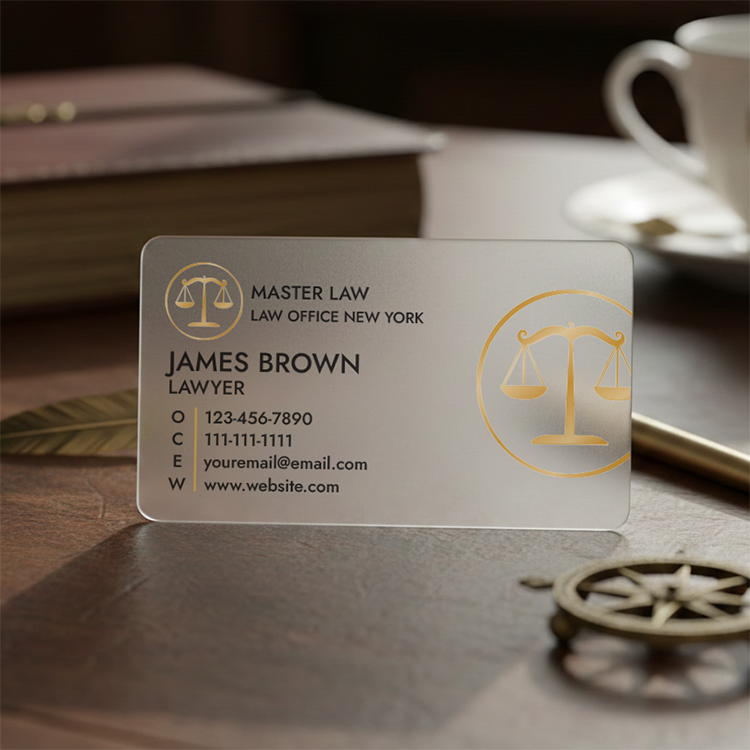



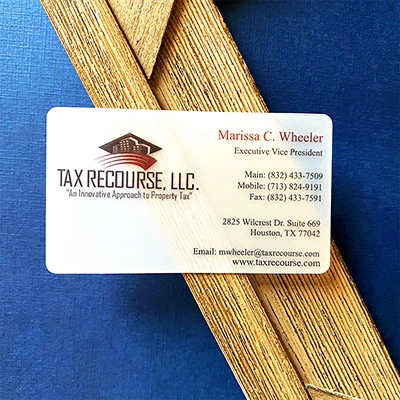

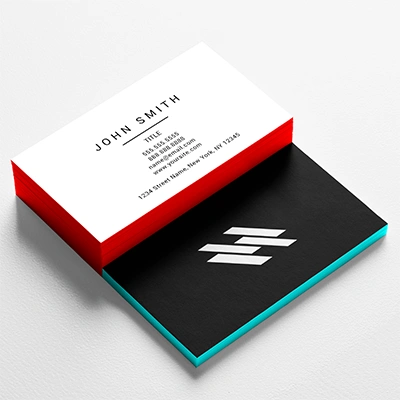
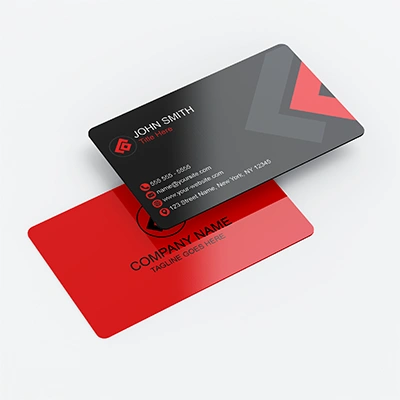
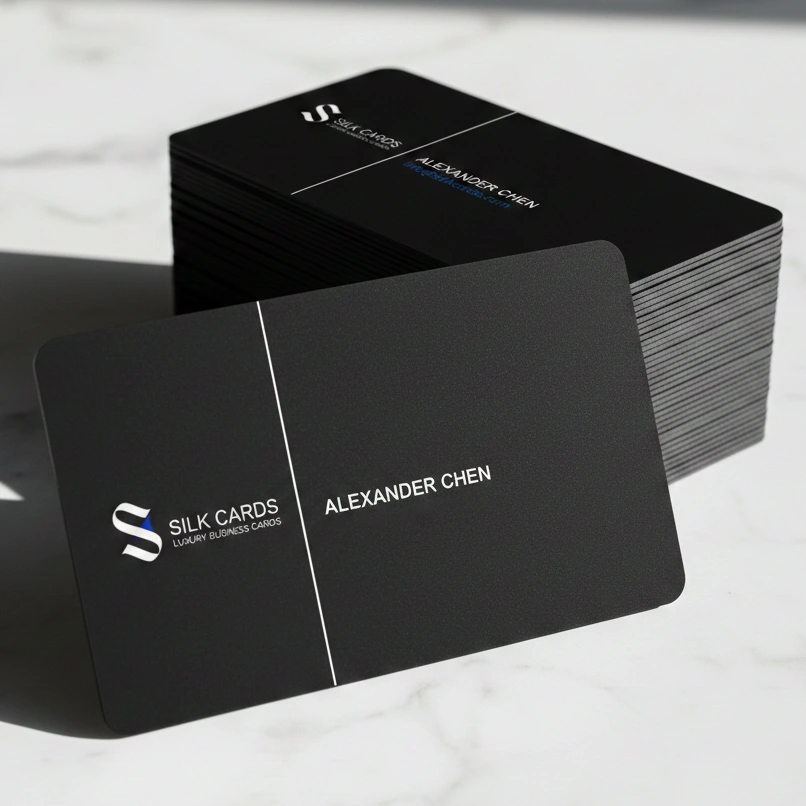


In consumer psychology, the physical feel of marketing material plays a critical role in brand perception—a concept known as haptic feedback. Handing over a flimsy card unconsciously signals low authority. We utilize premium paper stocks measured by their caliper or point (PT) thickness, adhering to strict TAPPI (Technical Association of the Pulp and Paper Industry) standards[1]. While standard cards are printed on 14pt or 16pt stock, we offer luxurious upgrades to 19pt Suede or ultra-thick 32pt Painted Edge cards to ensure maximum rigidity and perceived value.
We do not rely on standard home or low-grade digital printers. 1800BusinessCards uses commercial Offset Lithographic Printing for the vast majority of our products. This process uses the CMYK color model (Cyan, Magenta, Yellow, and Key/Black) mapped to ISO 12647-2 standards[2], allowing for hyper-accurate color reproduction, smooth gradients, and razor-sharp typography that digital toner-based printers simply cannot match.
To protect the integrity of the ink and cardstock, we utilize UV (Ultraviolet) curing and specialized laminations. Our high-gloss UV coatings undergo a rapid cross-linking photopolymerization process when exposed to intense UV radiation, resulting in a highly reflective, scuff-resistant polymer film[3]. For a more subdued, tactile experience, our Silk and Suede cards feature a soft-touch lamination that creates a velvety, non-reflective surface perfect for high-end corporate identities.
Not a graphic designer? No problem. In addition to our free online design studio where you can customize thousands of templates, we also offer free of charge business card design services. Simply provide us with your logo, contact info, and general vision, and our in-house prepress experts will craft a stunning, print-ready layout tailored to your brand.
A: If you are on a tight budget, our Standard 16pt Business Cards provide excellent rigidity and professional appeal at a highly economical price point. For mid-range budgets, Linen or Suede cards offer a significant tactile upgrade. If budget is not a constraint, ultra-thick Painted Edge or solid 30-mil Plastic cards are the ultimate luxury choice.
A: Yes! We understand that not everyone is a graphic designer. Our expert prepress team can help create a professional business card design for you absolutely free of charge. Simply reach out to our team with your logo and details, or use our free online Designer Studio to customize hundreds of ready-made templates.
A: The most common mistake is placing very thin borders close to the card's edge. Because commercial trimming can shift up to 1/16th of an inch, thin borders can appear visually uneven after cutting. We also recommend avoiding fonts smaller than 7pt for legibility, and always designing in CMYK color mode rather than RGB to prevent color shifting when printed.
A: It depends on your brand and usage. Glossy UV coatings make colors pop and are great for cards with vibrant photography. However, you cannot easily write on a high-gloss surface. Matte and Suede finishes offer a more subdued, elegant look, do not show fingerprints, and are easy to write on with a standard pen.
A: The standard North American business card size is exactly 3.5 inches by 2 inches (88.9 mm x 50.8 mm). When submitting a design file for printing, you must include an 0.125" bleed, making the final un-trimmed digital file size 3.625" x 2.125".
A: "PT" stands for Point, a unit of measurement used in the US printing industry to describe the caliper (thickness) of paper stock. One point equals 0.001 inches. Therefore, a 16pt business card is 0.016 inches thick. The higher the PT, the thicker and more rigid the card.
A: RGB (Red, Green, Blue) is an additive color model used for digital screens. CMYK (Cyan, Magenta, Yellow, Key/Black) is a subtractive color model used in commercial offset printing. Always design your business cards in CMYK mode to ensure the printed colors match what you intended, as RGB colors often appear much brighter on a monitor than they can be printed with actual ink.
A: A bleed is printing that goes beyond the edge of where the sheet will be trimmed. It gives the printer a small margin of error when cutting the cards down to their final 3.5" x 2" size. Without a bleed, minor shifts in the cutting blade could result in thin, unprofessional white borders around the edge of your card.
A: No, standard plastic business cards follow the traditional 3.5" x 2" sizing, which is slightly different than the ISO 7810 ID-1 credit card standard (3.37" x 2.125")[4]. However, our 30-mil plastic cards share the exact same thickness and extreme durability as a standard credit card.
A: Absolutely. If you designed your card using Canva, Photoshop, or generated ideas via AI (like Midjourney or ChatGPT), our prepress experts manually review the file. We check for proper CMYK color mapping, minimum 300 DPI resolution, and correct bleed areas before sending anything to the press.
[1] TAPPI T 411: Thickness (Caliper) of Paper. The Technical Association of the Pulp and Paper Industry establishes strict guidelines for measuring the thickness of cardstock to ensure structural rigidity and proper feeding through commercial offset presses. View TAPPI Standards.
[2] ISO 12647-2:2013 Graphic Technology. The International Organization for Standardization specifies the process control and colorimetric parameters for the production of half-tone color separations and offset lithographic prints (CMYK profiles). View ISO 12647-2.
[3] UV Photopolymerization Chemistry. Ultraviolet (UV) coatings consist of liquid oligomers and photoinitiators that undergo rapid cross-linking polymerization when exposed to ultraviolet radiation, instantly curing into a highly protective solid polymer film. RadTech UV Technology.
[4] ISO/IEC 7810:2019 Identification Cards. Specifies the physical characteristics of identification cards. The ID-1 format defines the standard 85.60 mm × 53.98 mm dimensions and 0.76 mm (30-mil) thickness utilized by credit cards and our premium solid plastic business card lines. View ISO 7810.
Unlike automated printing services that send unverified files straight to the press, our expert prepress team manually reviews and meticulously edits every single order that comes in. We thoroughly check your files for proper bleeds, high-resolution imagery, and exact safe zones. You can trust our certified print professionals to deliver flawlessly printed custom business cards—shipped directly to you with Free U.S. Ground Shipping.